
Brain Injury and Multiple Disadvantage
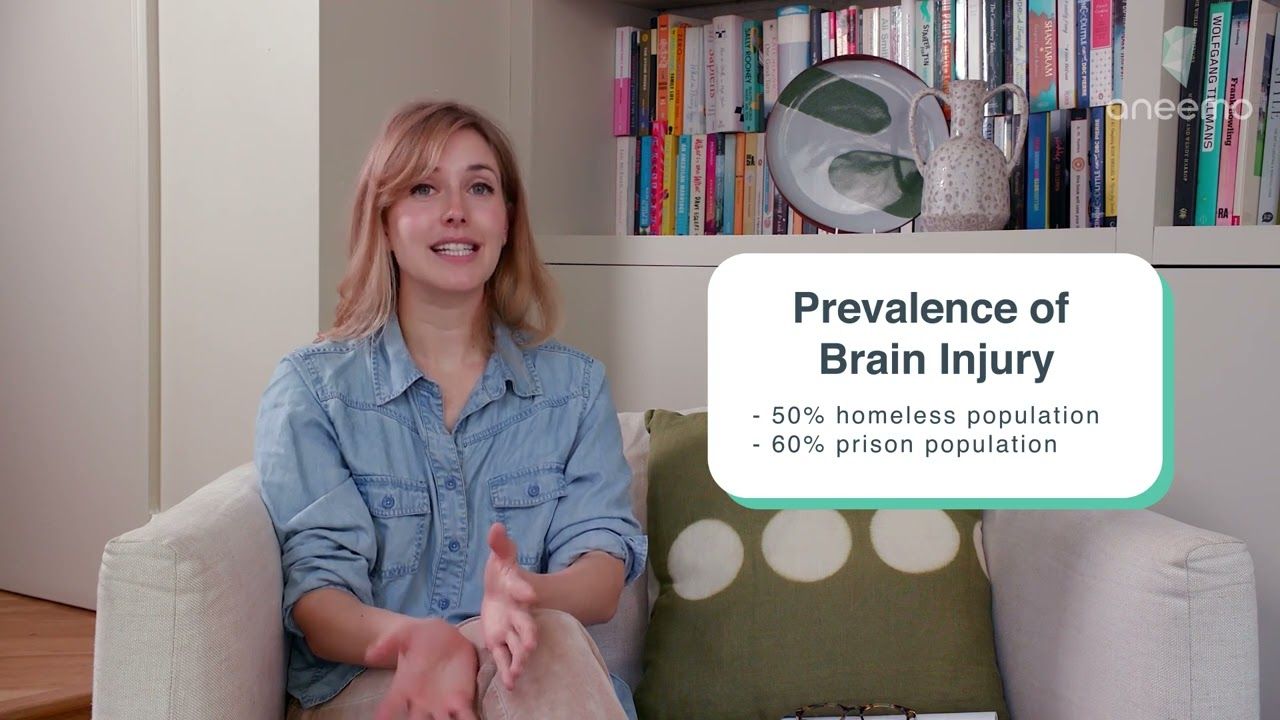
Expert-led video training with XR (immersive scenarios), on supporting people with brain injuries within populations experiencing multiple disadvantage. Taught by Dr Jessica Barton, Clinical Neuropsychologist.
Who it's for
Frontline staff and managers in homelessness, housing, health and mental health, drug and alcohol, probation, local authority and community outreach services. No clinical background needed.
Brain injury presentations are often misunderstood, so needs go unmet. This course builds the confidence to recognise, screen for and support an acquired brain injury.
What you'll be able to do
- Explain what an acquired brain injury is and how it differs from other conditions affecting cognition
- Recognise common signs of brain injury in the people you support
- Understand how alcohol, trimorbidity and other factors interact with cognition
- Use a simple screening approach and know when to refer
- Adapt communication and support plans so they work for someone with a brain injury
- Practise responses in XR scenarios before you meet them in real life
Your instructor
Dr Jessica Barton
Clinical Neuropsychologist. Operational Lead, Homeless Neuropsychology Pathway, Westminster (NHS)
Dr Jessica Barton is the Operational Lead for the Homeless Neuropsychology Pathway (HNP) in Westminster, an NHS service delivered in partnership with London’s homelessness sector. She is also an associate lecturer at various UK universities and a published author in peer-reviewed academic journals. Jess is passionate about improving access to neurorehabilitation for people who often fall through the gaps in statutory services, particularly those affected by substance use and multiple disadvantage.
Read more
Her clinical and academic work bridges the fields of brain injury, social exclusion and substance use. As a clinician, Jess has worked for many years across both in-patient and community brain injury services. As a researcher, her academic contribution to the field focuses on substance use and wraparound models of care, highlighting the value of peer support in meeting the complex needs of this population.
Jess is an experienced supervisor, mentoring psychologists, peer-support workers, and drug and alcohol practitioners. As a lecturer, she teaches neuropsychology in the context of multiple disadvantage on the Clinical Psychology Doctorate at King’s College London’s Institute of Psychiatry, Psychology and Neuroscience. She has presented at national conferences, including ACP-UK’s Clinical Health and Neuropsychology Network, on the development of the Homeless Neuropsychology Pathway. Jess is also the host of ‘Wired for Hope’, a neuroscience podcast that amplifies the voices of both Experts by Experience and Experts by Training.
Questions
Do I need a headset for the XR scenarios?
No. The XR scenarios also run on a desktop computer, so a headset is not needed.
When does the course start and finish?
Whenever you like. It's fully self-paced: start when you enrol, finish in one sitting or over several weeks.
How long do I have access?
For as long as you need it. You get lifetime access, for as long as the course is published on our platform, on any device you own.
Can my organisation buy places for a whole team?
Yes. Use "Get a team price" to see bulk and annual licence prices straight away, or ask us and we'll come back with bulk and annual licence options, invoicing, and completion reporting for your managers.